
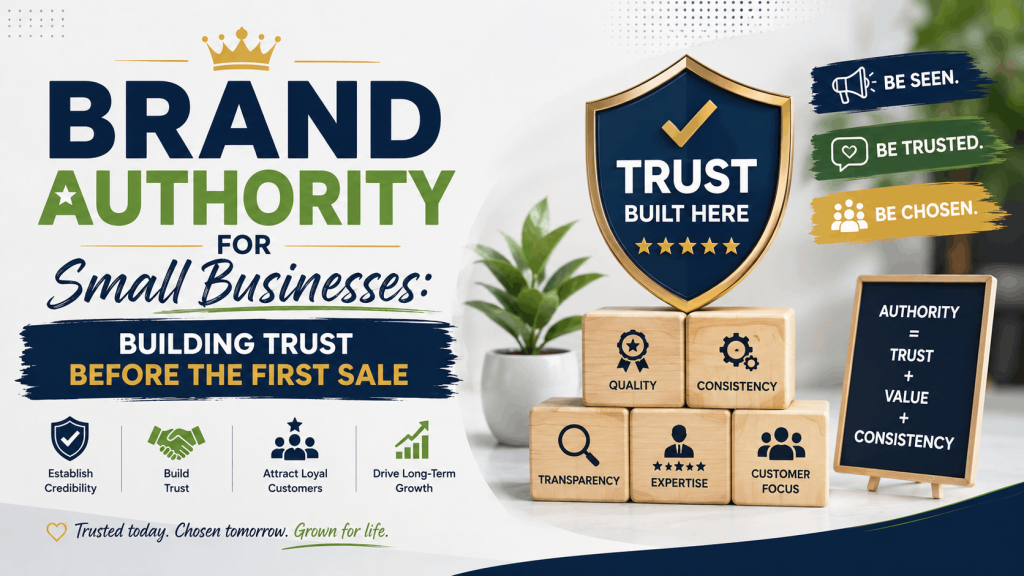
A first-time customer decides whether to trust a business long before they ever speak to someone. They form that impression from scattered signals: a website, a few reviews, maybe a directory listing they stumbled across while comparing options. Brand authority is the sum of those small impressions, and most small businesses build it accidentally instead of deliberately.
The good news is that authority doesn’t require a big budget. It requires consistency, transparency, and a presence that holds up under a quick glance.
What Authority Looks Like Online
Authority isn’t about sounding impressive. It’s about appearing complete and consistent wherever someone encounters your business. A business whose hours, address, and services match across its website, Google Business Profile, and any directories it appears on reads as more trustworthy than one with gaps or contradictions, even if the underlying business is equally good.
Search engines pick up on the same signals. Consistency across multiple sources tends to reinforce the sense that a business is established rather than fly-by-night.
Reviews and Real Proof
Authority also comes from evidence, not claims. Genuine customer reviews, responded to thoughtfully rather than ignored, do more to build trust than any amount of self-written marketing copy. A short, honest reply to a critical review often builds more credibility than a page full of five-star praise with no owner engagement at all.
Encourage reviews naturally, after a completed job or purchase, rather than in a way that feels forced or transactional.
Third-Party Confirmation Still Matters
Independent confirmation carries weight precisely because it isn’t coming from you. When a business appears on a recognized directory like StumblIO, it adds a layer of external validation that a self-published website can’t replicate on its own. It signals that your business exists within a broader, organized ecosystem of legitimate companies, not just on a page you control.
This kind of third-party presence works best as part of a broader pattern, alongside reviews, an active Google Business Profile, and a clear website, rather than as a standalone fix.
Conclusion
Brand authority builds slowly, through consistent details and genuine engagement rather than clever messaging. Businesses that pay attention to these unglamorous fundamentals tend to earn trust faster than those chasing a polished image without the substance behind it.